
When Your Roof Can No Longer Perform
Roof Replacement in Salem for homes with failing shingles, persistent leaks, or structural deck damage
Exteriors First LLC handles roof replacement in Salem for homeowners whose roofs have passed the point where repairs provide lasting value. Curling or missing shingles, granule loss visible in gutters, and water stains along interior ceiling lines are the clearest signs that a roof system is failing structurally, not just cosmetically. At that stage, patching individual sections only delays a larger and more disruptive failure.
Salem's climate—characterized by heavy fall and winter rainfall, extended periods of moisture saturation, and temperature swings between seasons—accelerates common roofing failures. Decking that has absorbed repeated moisture cycles often shows soft spots or delamination that isn't visible from the ground but becomes apparent during tear-off. A full replacement addresses the complete system: decking integrity, underlayment, flashing at all penetrations and transitions, and the final surface layer. Each component decision affects how the roof performs over the next several decades.
Request an on-site evaluation to review your current roof condition and identify which components require replacement.
What a Complete Roof Replacement Actually Involves
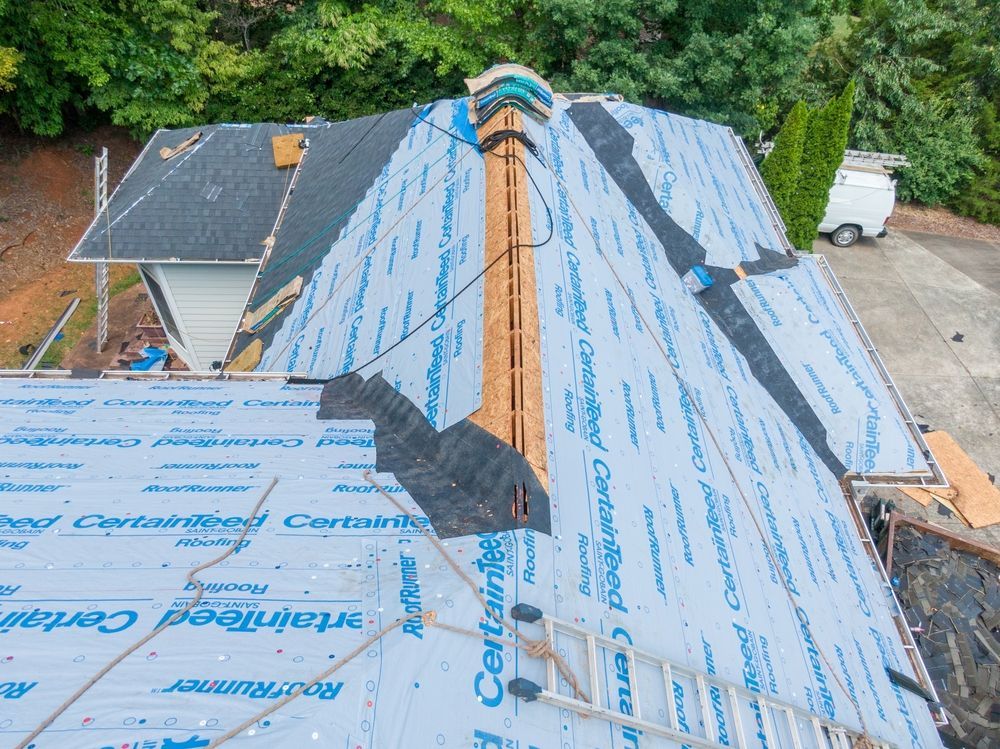
Roof replacement begins with a full tear-off of existing materials, which allows a direct inspection of the decking underneath before any new materials go down. This step matters because surface-level assessments cannot confirm whether decking is structurally sound, and installing new shingles over compromised plywood or OSB creates a failure point that won't be visible until moisture has already penetrated. Any soft, rotted, or delaminated sections are replaced before underlayment is installed.
Once the deck is confirmed solid, the installation sequence moves from underlayment to drip edge, valley flashing, field shingles, and finally ridge and hip caps. After completion, you'll notice clean, uniform lines at every ridge and valley, properly seated flashing around chimneys and pipe penetrations, and gutters free of the granule accumulation that signals an aging surface layer. Those observable details reflect whether the installation was completed with attention to water-shedding geometry or simply layered on for appearance.
Pitch, roof complexity, and the number of penetrations all affect the scope of a replacement project. Steeper pitches require additional safety rigging and affect labor time. Homes with multiple dormers, skylights, or chimney penetrations require more flashing work than simple gable roofs, and those details should be accounted for in any estimate before work begins.
Homeowners in Salem often have specific questions about what the replacement process involves and how to evaluate whether the work was done correctly. The answers below address the most common decision points.
Common Questions About Roof Replacement
What signals indicate repair is no longer sufficient?
When granule loss is widespread across multiple planes, when shingles are curling at the tabs rather than lifting at edges, or when interior leaks appear at multiple points despite prior repairs, the roof system as a whole is failing—not isolated sections.
How does Salem's rainfall affect the replacement schedule?
Roofing work requires dry decking before underlayment installation, so project timing accounts for extended wet periods; most contractors in this region plan installations around forecasted dry windows of at least two to three consecutive days.
What is included in a standard replacement scope?
A complete replacement includes tear-off, deck inspection and repair, full underlayment, all flashing at transitions and penetrations, field shingles, and ridge finish—partial scopes that skip underlayment or reuse existing flashing are a documented quality shortcut.
Why does decking condition matter before new shingles go down?
New shingles installed over soft or delaminated decking will show fastener pull-through within a few seasons, because the structural layer beneath cannot hold the nail pattern required for wind resistance ratings.
How can I evaluate the quality of a finished installation?
Uniform shingle alignment, fully embedded flashing with no exposed fasteners at penetrations, and clean valley lines are all observable quality indicators that don't require any roofing expertise to assess from the ground.
Exteriors First LLC provides detailed written estimates that break down material, labor, and any decking repairs identified during tear-off—so the final scope is clear before work begins. Arrange a roof evaluation to review the current condition of your home's roof system.