Flat Roofs Built for Sustained Weather Exposure
TPO / Flat Roofing in Salem for low-slope structures with active leaks, membrane failure, or inadequate UV protection
Low-slope roofing in Salem sits under standing water and prolonged UV exposure in ways that peaked-roof systems simply do not. Pooling water finds membrane seams, aging lap joints, and penetration flashings before any other failure point—and once water reaches the insulation layer beneath, the damage compounds quickly without showing obvious signs until interior ceiling damage appears. Exteriors First LLC installs TPO flat roofing designed specifically to address those failure mechanisms on commercial and residential low-slope structures.
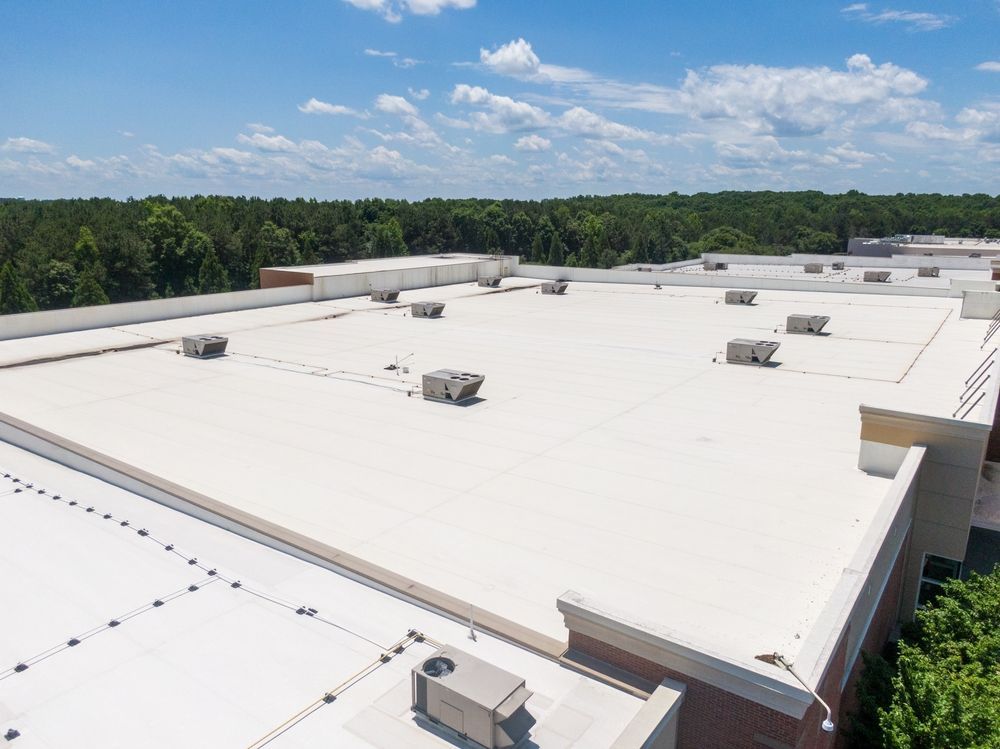
TPO membrane resists UV degradation through a thermoplastic compound that reflects solar radiation rather than absorbing it, which has a measurable effect on surface temperature and consequently on cooling loads during warmer months. The membrane is heat-welded at all seams rather than adhered with adhesives, which eliminates the lap-bond failures that cause most flat roof leaks. In Salem's climate, where UV exposure during summer months is more intense than the overcast winters suggest, that reflective property also reduces thermal cycling stress on the membrane itself.
Arrange a flat roof assessment to identify current membrane condition and any areas where water is already penetrating or pooling.
How TPO Membrane Addresses Low-Slope Leak Risk
TPO installation begins with surface preparation of the existing substrate—whether that's concrete decking, wood sheathing, or an older membrane that will serve as the base layer. Insulation board is fastened mechanically or adhered depending on the deck type, and the TPO sheet is then rolled out and positioned before heat-welding begins at all seams and termination points. The welding process creates a bond stronger than the membrane material itself, which is why seam failure on properly installed TPO is uncommon compared to other single-ply systems.
After installation, the most immediately visible change is the white or light-gray membrane surface, which reflects sunlight visibly compared to older dark-surface membranes or built-up roofing. Drainage patterns that were causing pooling are addressed during installation by adjusting insulation thickness at low points—a technique called tapered insulation—so water moves toward drains rather than sitting on the field of the roof. Exteriors First LLC incorporates drainage evaluation as part of the installation process rather than treating it as a separate concern.
The lifespan of a TPO system depends significantly on the quality of seam welding and the treatment of penetrations—pipe boots, HVAC curbs, and parapet wall terminations are the locations where premature failures begin on otherwise sound installations. Roof drain condition and overflow scupper placement also affect long-term performance, and both should be assessed during any flat roof evaluation. These are the details that separate a membrane that performs as designed from one that requires repairs within a few seasons.
Flat roofing involves different maintenance considerations and failure patterns than sloped systems. The questions below reflect what property owners typically ask when evaluating TPO installation or replacement.
Answers to Frequent Flat Roofing Questions
What causes most flat roof leaks?
The majority of flat roof leaks originate at seams, penetration flashings, or parapet wall terminations rather than in the field of the membrane—these are the points where installation quality has the greatest impact on long-term water resistance.
How does TPO compare to EPDM for Salem's climate?
TPO's heat-welded seams outperform EPDM's adhesive-bonded seams in climates with significant temperature cycling, because adhesive bonds are more susceptible to failure as materials expand and contract through seasonal shifts.
Why does standing water matter if the membrane is waterproof?
Prolonged ponding accelerates UV degradation at the water line, adds structural load to the deck, and creates algae growth that holds moisture against flashings—even a sound membrane performs better when water drains within 48 hours of rainfall.
What is tapered insulation and when is it used?
Tapered insulation is a method of building slope into a flat roof by varying insulation board thickness, directing water toward drains; it is used when the structural deck itself doesn't provide adequate drainage geometry.
How can I tell if my current flat roof needs replacement versus repair?
If membrane seams are lifting in multiple locations, if blisters are present across large field areas, or if insulation beneath the membrane is saturated, replacement is typically more cost-effective than attempting to repair widespread membrane deterioration.
Exteriors First LLC evaluates flat roof systems by inspecting membrane condition, seam integrity, drainage function, and penetration detailing before recommending repair or full replacement. Contact Exteriors First LLC to schedule a low-slope roof evaluation and review the current condition of your flat roof system.